Business Automation So You Can Focus on What Really Matters
Australian small and medium businesses lose an average of 12 hours per week to manual data entry, copy-pasting between systems, and repetitive admin tasks. Business automation in Australia is how growing businesses reclaim that time and redeploy it toward revenue-generating work.
Book a Free Automation AuditWorkflow Automation and Business Process Integration
Compound Automation designs, builds, and maintains automated workflows for Australian businesses using n8n -- an open-source automation platform we self-host for maximum flexibility and minimal ongoing costs. Your existing tools get connected so data flows without anyone touching a spreadsheet.
The goal is not to replace your team. It is to remove the repetitive, low-value work that sits between your high-value activities. When your sales team spends 45 minutes per day updating your CRM instead of talking to prospects, automation is the fix.
n8n — Self-Hosted and Open Source
Our automation platform of choice. n8n is open-source and self-hosted, which means no per-task pricing, no vendor lock-in, and full control over your data. It connects to hundreds of platforms out of the box and handles everything from simple triggers to complex multi-step workflows. Because we host it ourselves, your ongoing costs stay minimal.
Custom Integrations (API-Based)
When your tools lack native connectors, n8n's custom code nodes and HTTP request capabilities let us build integrations to virtually any system with an API. Webhook listeners, data transformation pipelines, and middleware connecting legacy systems to modern platforms. Built for MYOB, Xero, PropertyTree, and more.
AI — Only Where It Makes Sense
The best automations are deterministic -- they follow clear rules and produce predictable results every time. We integrate AI only where genuine reasoning is required, like classifying incoming enquiries or extracting data from unstructured documents. Everything else runs on reliable, rule-based logic. No unnecessary AI means fewer errors and lower costs.
How We Automate Your Business
Audit
Your current processes get documented, the highest-value automation opportunities identified, and the time and cost savings calculated for each. The audit produces a prioritised list of automations ranked by ROI. Most businesses have 5 to 10 automatable processes; your top 3 go first for fastest impact. Typically 3 to 5 days.
Map
For each automation, a detailed workflow diagram shows triggers, actions, conditions, and error handling. You approve the logic before anything gets built. This prevents the "it does the wrong thing" problem that plagues automation projects built without proper mapping. Typically 2 to 3 days per workflow.
Build
Automation development in n8n with custom code nodes and API integrations where needed. Each automation includes error handling, retry logic, and logging so you can see exactly what runs, when, and whether it succeeded. AI is added only where deterministic logic cannot solve the problem. Typically 1 to 3 weeks depending on complexity and number of automations.
Test
Every automation is tested with real data from your systems. Edge cases, error scenarios, and volume tests ensure reliability. Automations that handle your financial data (invoicing, payments, commission calculations) receive additional validation with your accounts team. Typically 2 to 3 days.
Monitor
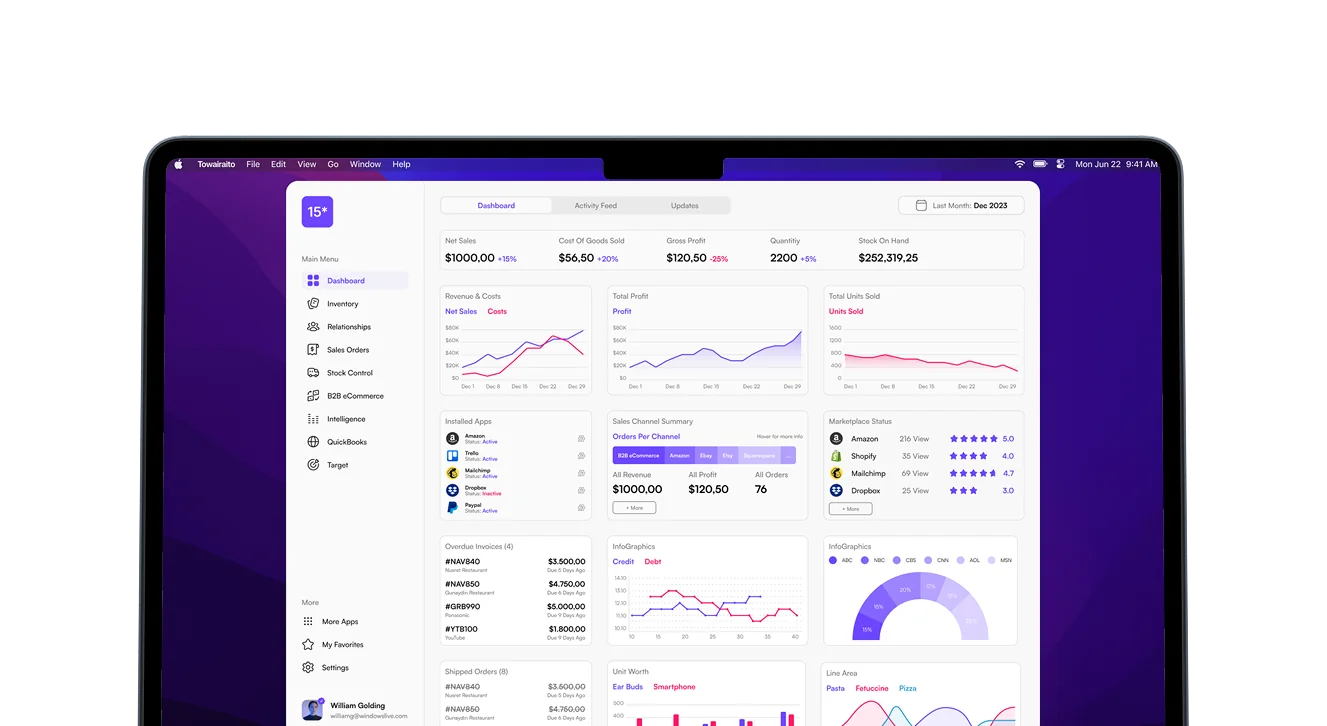
Post-deployment monitoring sends you automated alerts when an automation fails or produces unexpected results. Your dashboard shows automation runs, success rates, and time saved. Monthly reviews identify new automation opportunities as your business processes evolve. Monitoring is ongoing.
Results That Compound

“We went from processing every order by hand to having 90% of them run completely on autopilot. Orders come in, go to the right wholesaler, and the customer gets their tracking number — all without us touching a thing.
Frequently Asked Questions
Any process that follows a consistent pattern and runs more than once per week is a candidate for automation. The most commonly automated business processes in Australia are lead follow-up sequences, invoice generation and payment reminders, data synchronisation between CRM and accounting software, report generation, and client onboarding workflows. Compound Automation's free audit identifies your highest-ROI automation opportunities.
No. Business automation handles repetitive, mechanical tasks -- not the judgment-based work your team does best. The goal is to free your team from data entry, copy-pasting, and manual follow-ups so they can focus on client relationships, strategy, and revenue generation. Australian businesses that automate typically redeploy recovered hours into growth activities rather than reducing headcount. Our clients report their teams are more engaged after automation removes the mundane work.
Simple automations (email triggers, CRM updates, Slack notifications) can be live within 1 to 2 weeks. Multi-step workflows connecting 3 or more systems typically take 2 to 4 weeks. Complex end-to-end process automations involving custom integrations may take 4 to 6 weeks. Every project starts with a prioritised rollout plan so the highest-impact automations go live first.
Automation projects typically range from $2,000 to $20,000 depending on complexity, number of workflows, and whether custom API integrations are required. Simple workflow automations start from $1,990. Full process automation across multiple departments sits in the $10,000 to $20,000 range. Because we build on n8n (open-source, self-hosted), your ongoing platform costs are a fraction of what Zapier or Make would charge -- typically under $50 per month for hosting instead of $50 to $300+ per month in platform subscriptions.
Our primary platform is n8n -- an open-source automation tool we self-host for maximum flexibility and minimal ongoing costs. n8n connects to hundreds of platforms natively and supports custom code nodes for anything that needs bespoke logic. We integrate AI (such as LLMs for classification or data extraction) only where deterministic rules cannot solve the problem, because the best automations are predictable and reliable by design. If a client already uses Zapier or Make and prefers to stay on that platform, we can work with those too.
Every Compound Automation workflow includes error handling, retry logic, and automated alerts. If an automation fails, our monitoring system detects it within minutes and either retries automatically or notifies our team. Critical automations (those handling financial data or customer communications) have fallback procedures documented and tested. We maintain a 99.5 per cent automation success rate across all client workflows.
Ready to Automate and Save Time?
Every hour your team spends on repetitive tasks is an hour not spent on growth. Compound Automation finds the bottlenecks, builds the workflows, and monitors them so your team can focus on the work that matters.